I couldn’t switch off, then life forced me to
The science behind why your best work happens away from your laptop

We’re living in a moment where working hard doesn’t feel like a choice. AI threatens entire categories of jobs. Costs are rising. The pressure to upskill is constant. The message is subtle but persistent: work more, learn faster, don’t fall behind. That anxiety is hard to shake.
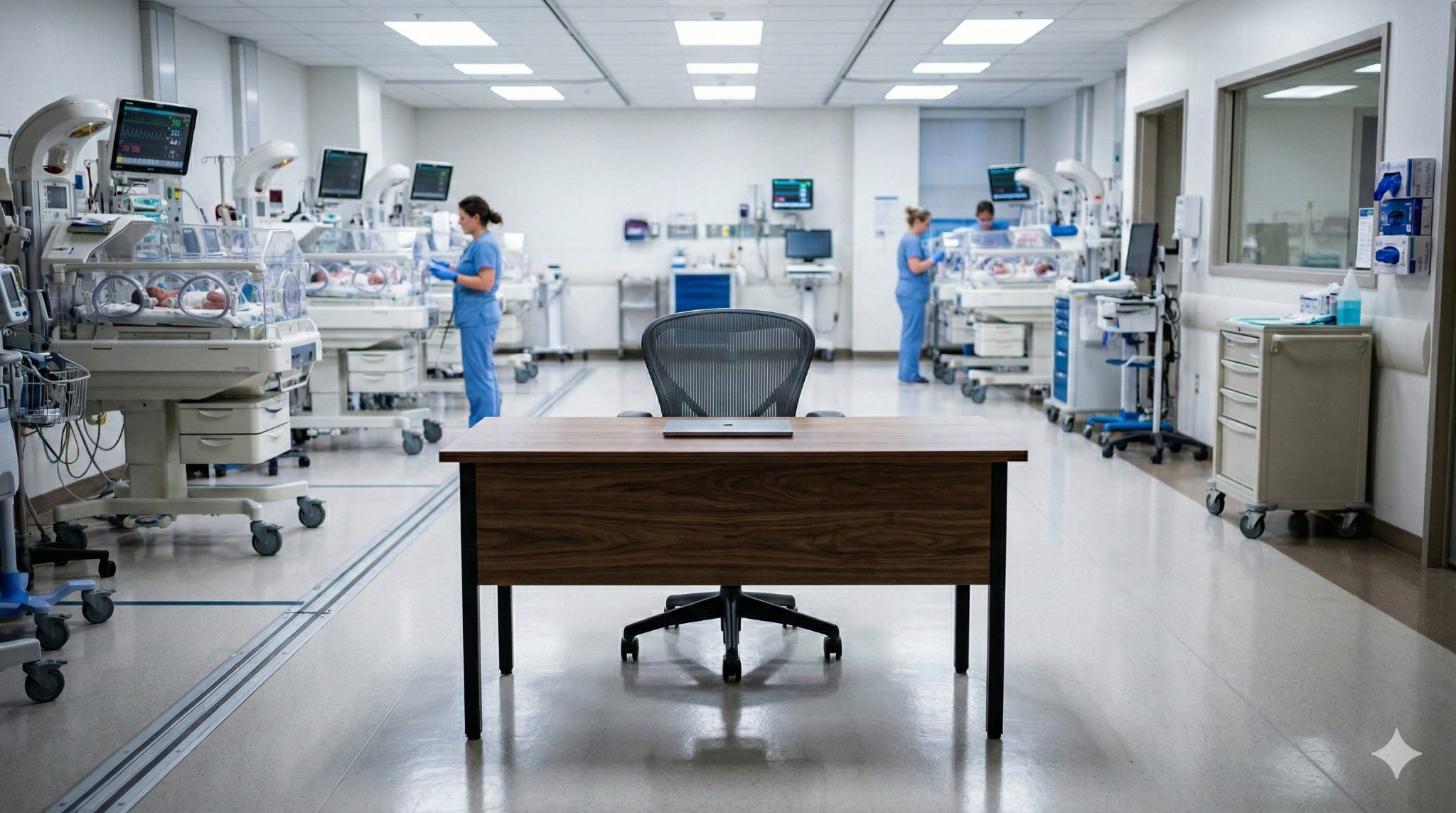
It became harder for me when my son was born prematurely in October last year. My world suddenly revolved around daily trips to the NICU. My wife needed to be there constantly. Financial pressure increased. Uncertainty became our baseline.
I responded the only way I knew how: by working harder. If I could just push more, think more, deliver more, maybe I could create security through effort.
Running on Empty
The problem was, I didn’t know how to switch off. Work ideas followed me to the NICU and home. They kept me awake. I would email myself thoughts at 2am so I wouldn’t forget them in the morning. My brain never fully disengaged. The combined stress of work and the NICU was exhausting.
Over the Christmas holiday, I took proper time off. Not half-working checking Slack and email on my phone, but real time away. When I returned to work in January, something surprised me. The break didn’t slow me down. It sharpened me.
However it’s clear not everyone sees it that way.
The Culture of More
In parts of the tech world, extreme hours are framed as ambition. The “996” model of working 9am to 9pm, six days a week became famous in China. It was later ruled illegal by China’s Supreme Court in 2021 due to its human cost.
Yet in the West, 70-hour weeks are now glorified. The assumption is simple: outcomes scale with effort. But cognitively, that’s not how humans work.
So if more hours isn’t the answer, what is? For me the evidence points to something counterintuitive, switching off entirely.
What Switching Off Actually Does to Your Brain
My best ideas often come during a run, in the shower, or on our monthly Wellness Day (a day off that Cover Genius gives every employee once a month). I used to feel guilty about stepping away, until I noticed a pattern I couldn’t ignore. My clearest thinking happens when I’m not at my desk. Problems often find solutions when doing something unrelated.
When you stop directing attention at a task, your brain activates what neuroscientist Dr Marcus Raichle calls the Default Mode Network. As the neuroscientist’s 2001 paper suggests, when you rest your brain doesn’t go quiet it starts processing the past, making connections and integrating experiences. Stepping away is not disengaging. It’s where the real thinking happens.
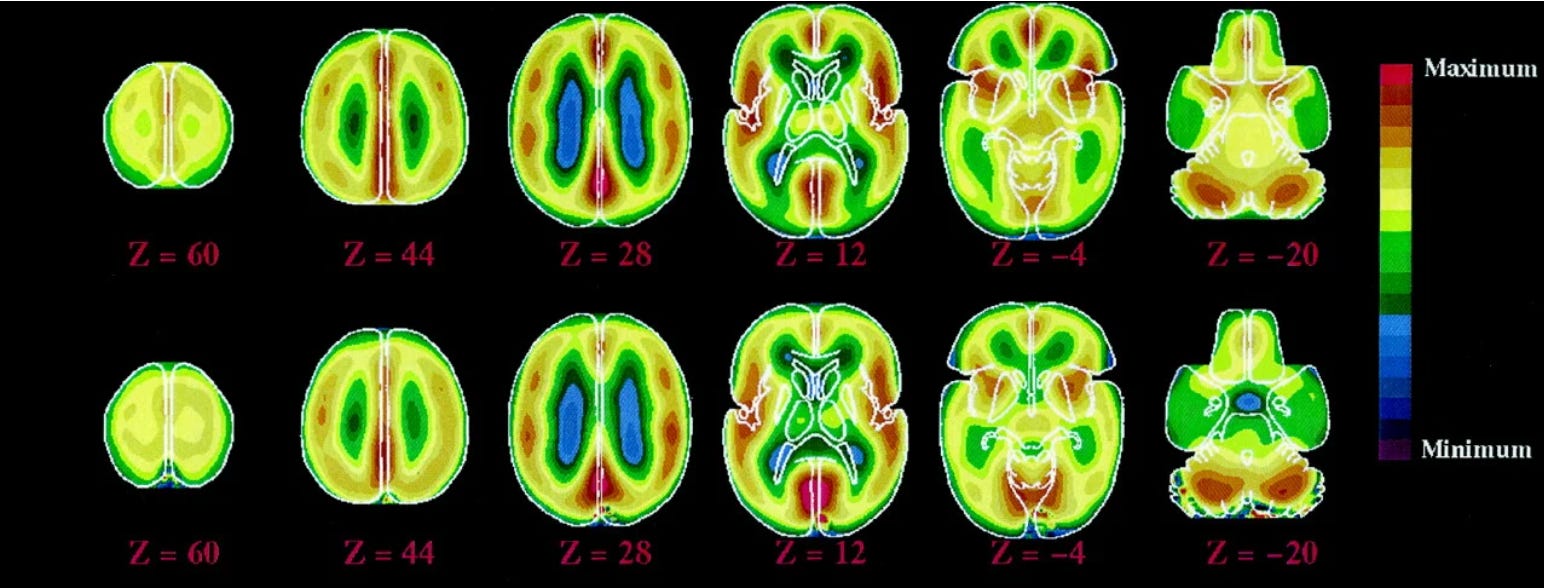
This image from Dr. Marcus Raichle’s research shows the brain’s ‘default state.’ It proves the brain is still busy processing information from the past even without an immediate task at hand.
This was exactly the trap I fell into. I was physically taking steps away from my desk, spending time in the NICU or sitting on the couch after work watching TV with my wife but my Default Mode Network was still processing work tasks. I realised I loved this ‘background brain’ that produced so many good ideas but I needed to be able to turn it off.
What I Actually Came Back With
Stepping back provided the distance to notice obvious adjustments. In his book Deep Work, Cal Newport argues that truly productive people treat rest as seriously as they treat focused work and that without a proper mechanism for switching off, your brain never fully disengages. The break forced me to finally act on it.
So I built one. I created a simple shutdown ritual: review open tasks, identify tomorrow’s priorities, and consciously close the day. My version also includes noting completed tasks. This allows me to give myself credit and not just focus on a never-ending to-do list.
I turned it into a daily habit by building a Gemini Gem to run the ten-minute shutdown process each day. In addressing one anxiety, I inadvertently eased another. The very AI tools I felt pressure to learn became part of how I decompress from that pressure.
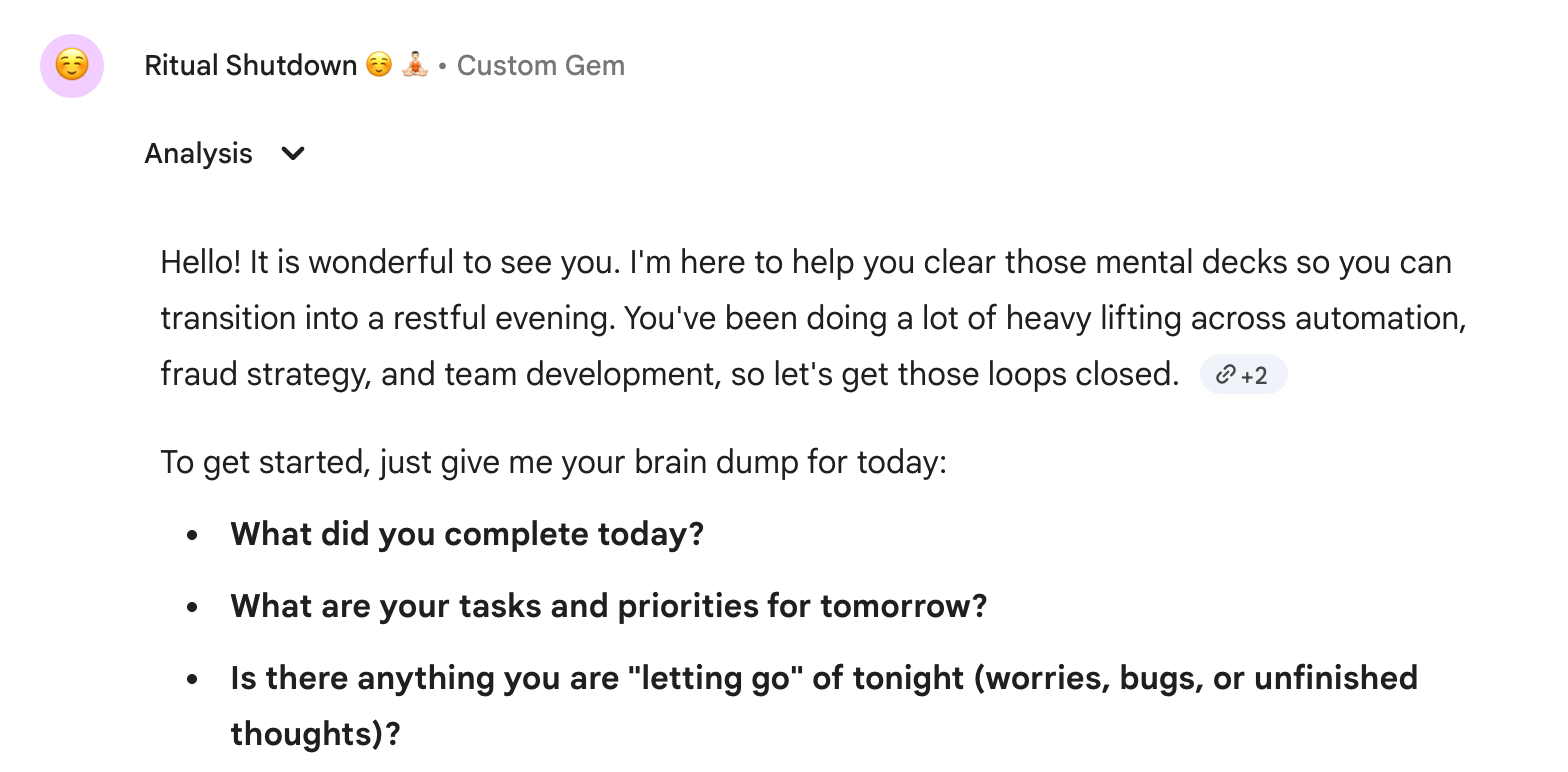
My Ritual Shutdown Gem’s three prompts that help me close out the day and actually switch off.
Distance Creates Perspective
You cannot evaluate work while immersed in it. Distance creates the gap reflection needs. Without that gap, busyness starts to masquerade as progress.
As a product manager, my backlog never empties. There is always more work to do. The pressure to learn and ship never disappears. I still feel guilty sometimes when I close my laptop.
What I’ve learned, though, is this: even small, genuine breaks; a walk without your phone, a lunch away from Slack, a weekend without opening your laptop, protect the mental space where your best ideas live.
In one of the hardest seasons of my life, the most productive decision I made was to stop working for a while. Rest didn’t weaken my output. It improved it.
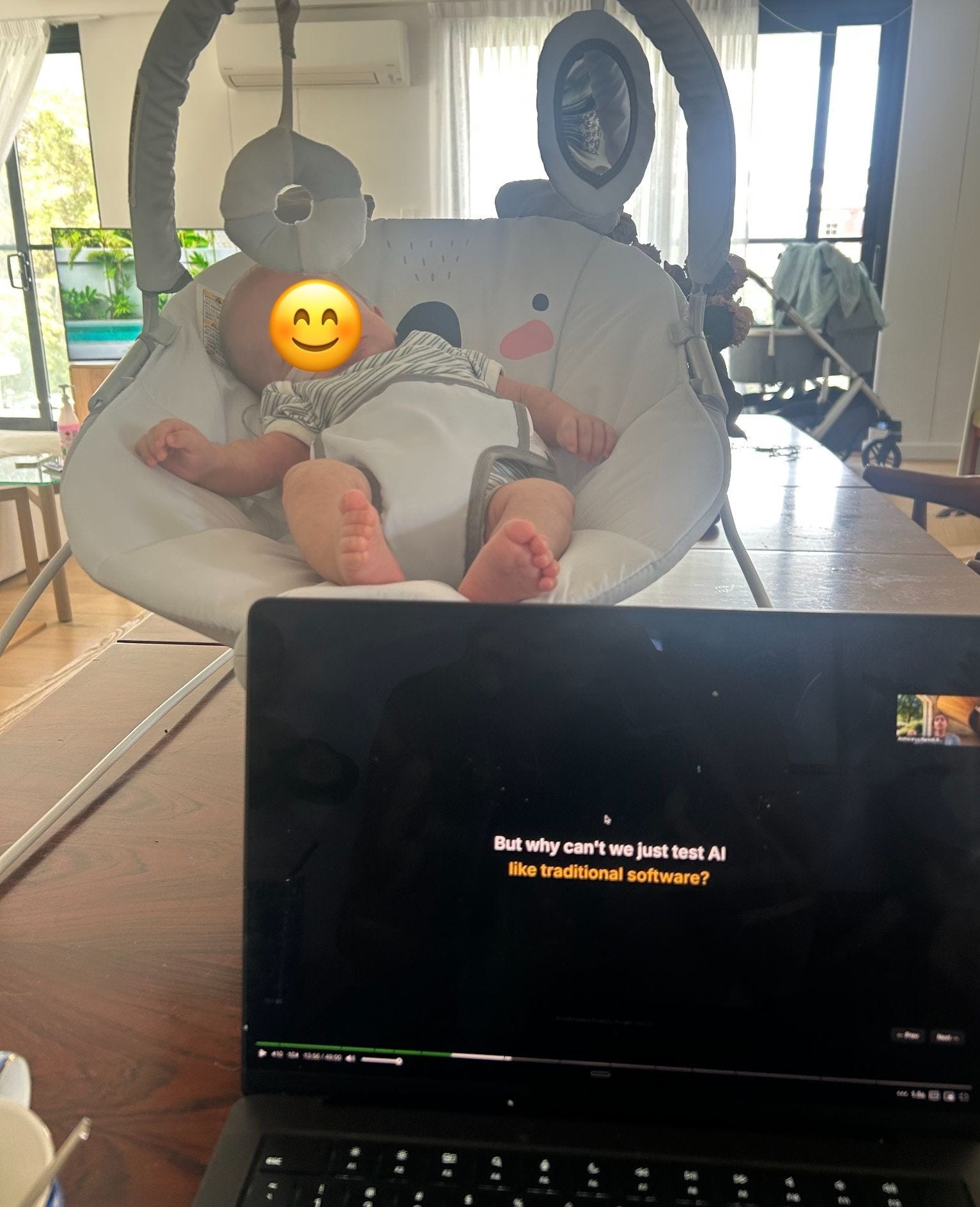
P.S. After 114 days Leo is out of the hospital. I’m currently on paternity leave, still trying to balance learning about AI with being present as a new dad. It’s a work in progress.
References
On the “Background Brain” (Default Mode Network): Dr. Marcus Raichle’s 2001 study, “A Default Mode of Brain Function,” was the first to show that the brain remains highly active and organized even when it isn’t focused on a specific task.
Raichle, M. E., et al. (2001). PNAS.
Research from Dr. Sumedha Verma (Sleep & Cognitive Health): My thanks to Dr. Sumedha Verma, a lead researcher in sleep health, for her guidance on the intersection of parenting, stress, and cognitive recovery. Her co-authored research highlights:
The “Parenting Trap”: Research shows that 60% of parents report significant insomnia symptoms in the months following birth, creating a cognitive “perfect storm” for high-performing professionals.
The Power of Habit Shifts: The “gold standard” for reclaiming rest is Cognitive Behavioral Therapy for Insomnia (CBT-I), which relies on mindset and behavioral shifts rather than medication.